Zonix Motor Zonix Motor

2026 Top Miniature Gear Motor Suppliers Worldwide?

Time:2026-09-20 Author:Liam
0%

Choosing a reliable Miniature Gear Motor supplier in 2026 requires more than comparing catalog prices. Real performance appears in the details: stall torque, gear backlash, operating noise, thermal limits, and service life under repeated loads. A motor that works smoothly on a test bench may struggle inside a compact medical device, inspection camera, valve actuator, or battery-powered instrument.

Eugen Elmiger, former CEO of Swiss motion-control manufacturer maxon, has often emphasized a practical engineering truth: “The smaller the drive, the more difficult it is to achieve high torque and efficiency.” That challenge shapes this worldwide supplier review. It examines manufacturers by product range, customization capability, manufacturing experience, quality systems, delivery reliability, and technical support. It also considers whether suppliers provide measured curves, gearbox drawings, sample testing, and clear tolerances.

Specifications can mislead.

A high rated torque does not always mean better field performance. Poor lubrication, excessive heat, or an unsuitable gear ratio can reduce service life quickly. This guide therefore looks beyond promotional claims and considers evidence from engineering documentation, production capability, customer feedback, and application experience. Some rankings may remain debatable because supplier data changes, regional availability differs, and smaller manufacturers may disclose less information. That limitation deserves attention.

The following selection highlights leading Miniature Gear Motor suppliers worldwide for 2026. It is designed to help engineers, purchasing teams, and product developers compare practical strengths before requesting samples or approving a supplier.
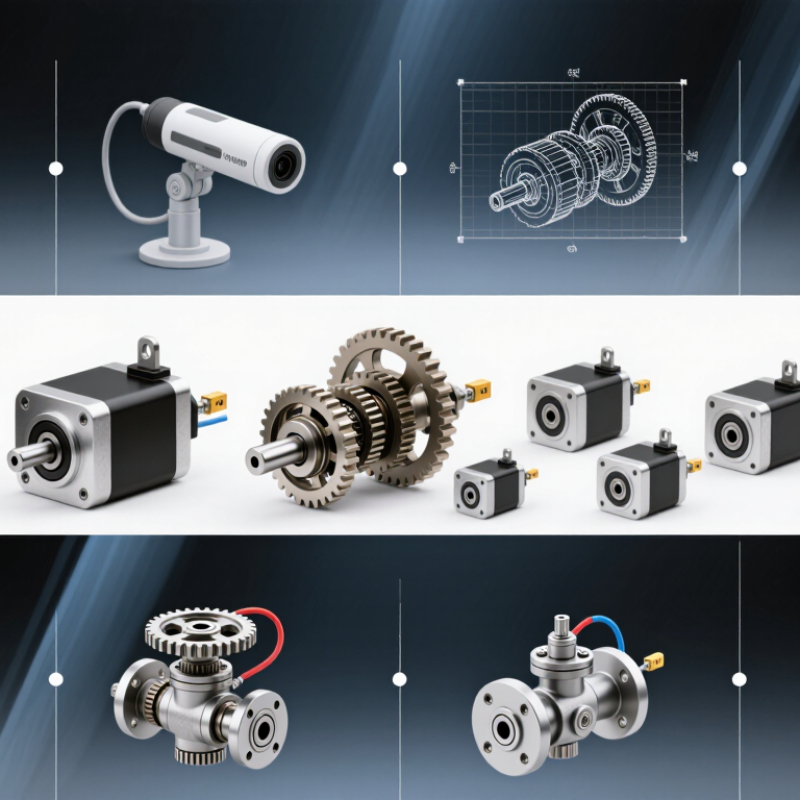
2026 Top Miniature Gear Motor Suppliers Worldwide?

What Are Miniature Gear Motors and Where Are They Used?

Miniature gear motors are compact electromechanical units that combine a small motor with a reduction gearbox. The motor creates rotational energy, while the gearbox lowers speed and increases torque. This arrangement helps small devices move controlled loads without using much space. Small package. However, compact does not mean unlimited power. Heat, noise, friction, and gear wear still affect performance.

These motors appear in medical instruments, laboratory equipment, camera mechanisms, smart locks, vending systems, and small robotic devices. They can adjust a surgical instrument, position a lens, open a compact valve, or drive a miniature wheel. In wearable equipment, low current consumption matters greatly. In factory sensors, repeatable movement may matter more than peak speed. Designers should match the motor to the real load, not an ideal laboratory value.

During prototype testing, engineers usually measure starting torque, running current, speed, backlash, and operating temperature. A datasheet provides useful guidance, but actual results can change with mounting, lubrication, voltage, and duty cycle. Gear ratios also create compromises. Higher reduction can improve torque, yet it may reduce output speed and increase response delay. Some projects fail because designers check dimensions first and operating conditions later. That approach deserves reconsideration. A reliable supplier should provide clear tolerances, test data, service information, and samples for evaluation before volume production.

How to Evaluate Miniature Gear Motor Suppliers Worldwide

When evaluating miniature gear motor suppliers worldwide, start with the application, not the catalog. Define voltage, rated torque, speed, gear ratio, shaft load, noise limits, and duty cycle. A supplier should explain how these values were measured. Ask for test conditions, not only attractive graphs. Small motors can overheat inside compact housings.

Request samples from the same production process used for mass orders. Measure current draw, backlash, startup torque, vibration, and temperature after continuous operation. A useful test may run the motor for several hours under realistic load. Check whether the supplier controls gear alignment, lubricant quantity, magnet strength, and shaft concentricity. Good documentation includes drawings, tolerance tables, inspection records, and material information. It should be clear and traceable. Vague answers deserve caution.

Supplier reliability also depends on engineering support and production discipline. Review factory capacity, quality procedures, change-control methods, and failure-analysis reports. Confirm lead times, minimum order quantities, packaging protection, and communication during problems. Independent audits can help, but they never replace your own sample testing. A certificate looks reassuring. It is not proof of every batch. I have seen technically strong proposals fail because one tiny connector changed without notice. That detail can stop an entire assembly line. Ask how design changes are approved and reported. Price matters, but unstable performance creates larger costs through rework, delays, and field complaints. A supplier that admits limitations may be safer than one promising everything.

2026 Top Miniature Gear Motor Suppliers Worldwide: How to Evaluate Them

Recommended procurement weighting for comparing miniature gear motor suppliers

Use this weighted framework to evaluate suppliers consistently. Technical performance and reliability should receive the highest priority, followed by quality systems, customization capability, delivery performance, compliance documentation, and total cost. The percentages represent a practical evaluation model rather than company-specific results.

Leading Miniature Gear Motor Suppliers in 2026

Leading miniature gear motor suppliers in 2026 are judged by more than catalog breadth. The strongest suppliers provide stable torque, controlled backlash, and clear efficiency data. Their motors support compact devices, medical instruments, robotics, and automated equipment. Practical evaluation should include sample testing at the intended voltage and load. A 6 mm shaft may perform well in a brochure but fail under repeated side pressure. Experienced suppliers explain gear materials, lubrication limits, noise levels, and thermal behavior. They also provide traceable production records and consistent inspection methods.

Tips: Request three samples from different batches. Measure speed, current, noise, and temperature after continuous operation. Check whether test conditions match your application. Ask about customization, minimum order quantities, delivery capacity, and failure analysis. Avoid choosing only by unit price.

Reliable suppliers in 2026 should show evidence of process control, electrical safety testing, and international quality management. Their engineers should respond with calculations, not vague promises. A useful supplier can recommend a ratio after reviewing load cycles and space limits. However, no supplier is perfect. Some published efficiency figures may exclude startup resistance or gear wear. I have seen compact motors become noticeably louder after long running periods. That detail is easy to miss. Buyers should keep a small comparison record, repeat critical tests, and leave room for design changes before final production.

Key Technologies and Specifications to Compare

For a 2026 worldwide supplier comparison, miniature gear motors should be judged by tested performance, not catalog speed alone. Gear ratio, rated torque, no-load speed, operating voltage, and continuous-duty temperature reveal real application value. A 12-volt motor rated at 3,000 rpm may deliver little torque after reduction. Ask for load curves at the exact voltage and duty cycle.

Efficiency deserves serious attention. The International Energy Agency reports that electric motor systems consume about 45% of global electricity. Even small losses can matter in equipment operating continuously. Compare motor efficiency, gearbox efficiency, stall current, and thermal rise. Planetary gearboxes usually provide higher torque density, while spur gears can reduce cost and simplify maintenance. Neither choice is automatically superior.

Check backlash, noise, shaft runout, bearing design, and encoder compatibility. A camera actuator may need low backlash, while a dispensing mechanism may prioritize repeatable torque. Supplier data should include endurance-test hours, noise measurement distance, grease temperature limits, and sample-size details. Industry forecasts from Grand View Research and MarketsandMarkets indicate continued mid-single-digit growth in miniature motor demand, driven by automation, medical equipment, and compact appliances. Treat forecasts carefully. They describe markets, not guaranteed quality.

I would also audit traceability, incoming inspection, and change-control procedures. ISO 9001 certification helps, but it does not replace independent testing. Request three production samples, measure current and torque, then repeat after thermal cycling. Small differences often expose large process weaknesses.

How to Select the Right Supplier for Your Application

How to Select the Right Miniature Gear Motor Supplier for Your Application

Supplier selection should begin with the load, not the catalog. Measure torque, speed, duty cycle, noise, backlash, and available space. A motor that works on a bench may fail after thousands of starts. Grand View Research reported that Asia Pacific held more than half of global electric motor revenue in 2023, reflecting strong manufacturing capacity. However, capacity does not always mean application expertise.

Ask suppliers for measured curves, not optimistic headline values. Request torque-speed data at your voltage, temperature, and duty cycle. Check gear material, shaft tolerance, lubrication, sealing, and expected service life. For medical, robotic, or precision equipment, verify traceability and quality systems such as ISO 9001. MarketsandMarkets has forecast continued growth in the gear motor market through 2028, driven by automation and compact equipment. More suppliers will appear. More comparison work will be necessary.

Review sample consistency across at least three production batches. Confirm vibration, stall current, startup behavior, and acoustic performance. A useful supplier should explain failure modes clearly. That matters more than a polished quotation. Also examine lead times, minimum order quantities, customization control, and after-sales engineering. I would not trust a supplier offering only one perfect test result. Real applications are rarely perfect. Your own testing may reveal an uncomfortable mismatch. That is valuable evidence, not wasted effort.

2026 Top Miniature Gear Motor Suppliers Worldwide? - How to Select the Right Supplier for Your Application

Supplier Profile Common Manufacturing Region Typical Gear Motor Format Common Voltage Range Typical Output Speed Typical Continuous Torque Customization Capability Typical MOQ Sample Lead Time Typical Production Lead Time Best Application Fit Key Verification Points
High-volume OEM manufacturer East and Southeast Asia Brushed DC gear motor, spur or planetary gearbox 3–24 V DC 10–500 rpm 0.01–1.50 N·m High; shaft, connector, winding, gearbox ratio and mounting changes are commonly available 500–5,000 units 2–6 weeks 6–12 weeks Consumer devices, small actuators, pumps and compact automation Load-life testing, no-load current, stall torque, gear noise and batch consistency
Low-volume customization specialist China, Taiwan and South Korea Custom DC gear motor with optional encoder or brake 3–36 V DC 5–800 rpm 0.02–2.00 N·m Very high; suitable for rapid mechanical and electrical modifications 50–500 units 3–8 weeks 8–16 weeks Prototype programs, laboratory equipment and specialized instruments Engineering-change control, prototype-to-production consistency and component traceability
Precision motion supplier Japan, Germany, Switzerland and Northern Europe Planetary or low-backlash gear motor 6–48 V DC 1–400 rpm 0.05–5.00 N·m High; encoder resolution, backlash, shaft geometry and control options may be specified 10–100 units 6–12 weeks 10–24 weeks Robotics, laboratory automation, optical systems and precision positioning Backlash, repeatability, radial load, axial load, thermal rise and encoder accuracy
Industrial automation supplier Germany, Italy, France and the United Kingdom Brushed or brushless DC gear motor with control electronics 12–48 V DC 5–1,000 rpm 0.05–8.00 N·m Medium to high; integration with sensors, drivers and industrial communication may be offered 25–250 units 4–10 weeks 8–20 weeks Conveyors, valves, feeders, laboratory machines and factory equipment Duty cycle, overload capability, EMC performance, service support and spare-part policy
Medical and laboratory equipment supplier North America, Western Europe and Japan Low-noise DC gear motor, often with encoder or position feedback 6–24 V DC 2–300 rpm 0.01–1.00 N·m High; cleanliness, noise, cable assemblies and feedback options can be controlled 10–200 units 6–14 weeks 12–24 weeks Analyzers, dosing systems, imaging accessories and sample handling equipment Documentation control, material declarations, acoustic noise, sterilization compatibility and life testing
Automotive and mobility component supplier Europe, North America, Japan, South Korea and China Robust DC gear motor with sealed housing and position sensing 12–48 V DC 5–600 rpm 0.10–10.00 N·m Medium to high; sealing, connectors, mounting and environmental resistance are commonly configurable 1,000–10,000 units 8–16 weeks 16–36 weeks Seat mechanisms, vents, locks, pumps and compact vehicle actuators Temperature cycling, vibration, ingress protection, corrosion resistance and end-of-line testing
Distribution and engineering-service provider North America, Europe, Southeast Asia and Australia Standard miniature gear motors sourced from multiple factories 3–24 V DC 10–800 rpm 0.01–2.00 N·m Low to medium; cable, connector and packaging changes are more common than internal redesign 1–100 units 1–4 weeks when stocked 4–12 weeks Prototype builds, maintenance, replacement parts and small engineering projects Actual stock status, manufacturer authorization, traceability, warranty terms and technical support
Brushless efficiency-focused supplier China, Taiwan, South Korea, Germany and the United States Brushless DC gear motor with Hall sensors or integrated controller 12–48 V DC 20–2,000 rpm 0.03–6.00 N·m High; winding, controller settings, feedback and communication interfaces may be tailored 100–1,000 units 5–12 weeks 10–20 weeks Fans, pumps, mobile equipment, battery-powered systems and continuous-duty mechanisms Efficiency map, thermal performance, controller compatibility, commutation behavior and electromagnetic compatibility
Selection note: The figures shown are indicative market ranges for miniature gear motors and supplier categories, not quotations from individual companies. Confirm torque at the required speed, duty cycle, ambient temperature, mounting orientation, shaft loads, noise limits, regulatory documents, sample results and total landed cost before placing an order.

FAQS

What is a miniature gear motor?

It combines a small motor with a reduction gearbox. The motor creates rotation. The gearbox lowers speed and increases torque. Small package. Heat, friction, noise, and gear wear still matter.

Where are miniature gear motors commonly used?

They operate medical instruments, laboratory equipment, camera mechanisms, smart locks, vending systems, and small robots. They can position a lens, open a compact valve, or drive a miniature wheel.

How should I choose the right miniature gear motor?

Start with the real application, not the catalog. Define voltage, torque, speed, gear ratio, shaft load, noise limits, and duty cycle. Check the actual load, including startup resistance. An ideal laboratory value may disappoint.

What should engineers measure during prototype testing?

Measure starting torque, running current, speed, backlash, vibration, and operating temperature. Test the motor under realistic loads. Several hours of continuous operation may reveal overheating or unstable performance.

How does the gear ratio affect performance?

Higher reduction usually increases output torque. It also lowers output speed and may delay response. The best ratio depends on movement, load, and control requirements. More torque is not always better.

Why can a miniature gear motor overheat?

Compact housings provide little room for heat dissipation. Excessive load, high current, friction, or long duty cycles can raise temperature. Measure heat inside the final enclosure, not only on an open test bench.

What documents should a supplier provide?

Request drawings, tolerance tables, inspection records, material information, and test conditions. Ask how alignment, lubricant quantity, magnet strength, and shaft concentricity are controlled. Vague answers deserve caution.

How can I evaluate supplier reliability before mass production?

Request samples from the same process planned for larger orders. Review quality procedures, production capacity, change-control methods, and failure-analysis records. Check lead times, packaging, communication, and minimum order requirements. A certificate looks reassuring. It cannot prove every batch.

Why should design changes be reported clearly?

A small connector change can stop an entire assembly line. Ask how changes receive approval and notification. Independent audits help, but your own sample testing remains necessary. I would not trust promises alone.

Conclusion

This guide explores what a Miniature Gear Motor is, how its compact motor-and-gear design delivers controlled speed and torque, and where it is commonly used, including medical instruments, laboratory equipment, robotics, automation systems, smart devices, and precision mechanisms. It also explains how to evaluate suppliers worldwide by examining manufacturing capabilities, quality management, engineering support, customization options, production capacity, delivery reliability, and communication.

The 2026 supplier overview focuses on comparing providers without relying on brand promotion, helping readers understand the technologies and specifications that matter most. Important factors include gear materials, reduction ratios, rated voltage, torque, speed, efficiency, noise, size, operating life, thermal performance, and environmental resistance. The final section offers a practical selection framework: define the application requirements, confirm testing and certification documentation, assess sample performance, review total cost and supply stability, and choose a supplier capable of providing consistent quality and long-term technical support.

Liam

Liam

Liam is a dedicated marketing professional with a profound expertise in the industry, where he excels at highlighting the unique advantages of our core products. With a keen understanding of market trends and consumer needs, Liam frequently updates our company’s professional blog, providing......